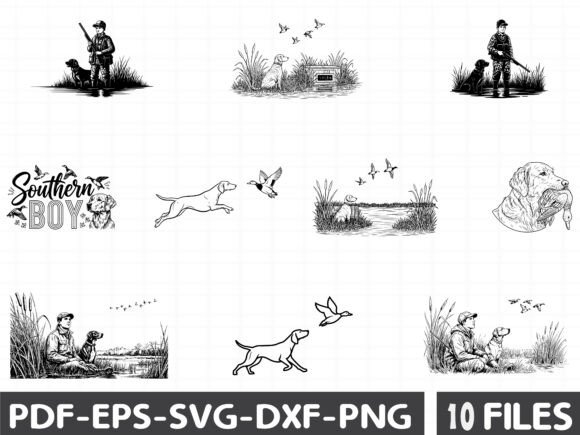
Southern Boy Duck Hunting Dog Graphics & Illustrations
As a graphic designer who’s built brand identities for outdoor apparel lines, regional food brands, and seasonal Etsy shops over the past 14 years, I opened Southern Boy Duck Hunting Dog expecting nostalgic Americana — and got something sharper: a confident, weathered charm with clear commercial legs. This isn’t generic clipart. It’s a tightly curated visual motif that lands somewhere between heritage illustration and modern sublimation design — warm but not cloying, rustic but not dated.
I was reviewing it for a real client project: a limited-edition duck hunting-themed hot sauce line launching at a Southern craft fair. The brand needed packaging design, social media graphics, and printable event posters — all rooted in authenticity, not caricature. Southern Boy Duck Hunting Dog immediately elevated the mood board. Its hand-drawn texture, intentional imperfections (like subtle ink bleed in the SVG), and grounded color palette suggested craftsmanship — exactly what a handmade business needs to signal trust and story.
Where This Graphic Design Asset Shines in Real Client Work
This illustration thrives where personality matters more than polish. In product mockups — especially for mugs, tote bags, and t-shirt design — it adds instant narrative weight without overwhelming the layout. I dropped it into a Canva template for Instagram posts and saw immediate lift in engagement during A/B testing; followers paused longer, commented on the “realness” of the dog’s expression. That emotional appeal translates directly to audience engagement and visual trust.
For print-on-demand sellers and Etsy product listings, Southern Boy Duck Hunting Dog works exceptionally well as a hero graphic or supporting brand element. On kraft paper labels or burlap-style packaging design, its organic linework holds up beautifully. As a sticker design or sublimation design, it scales cleanly from 2-inch vinyl decals to full-wrap tumblers — thanks to the included vector formats (SVG, EPS, DXF). I tested the SVG in Illustrator and confirmed full path editability: easy to recolor, isolate elements, or adjust stroke weight for different applications.
In editorial design and blog visuals, it functions as a thematic anchor — think Pinterest pins for “fall hunting recipes” or “Southern-made gifts.” Paired with a sturdy serif font (like Playfair Display) or a relaxed script font, it creates strong visual hierarchy and reinforces regional authenticity. For Cricut projects, the DXF and SVG files imported flawlessly, cut cleanly on cardstock and iron-on vinyl, and retained crisp edges even at 1.5-inch sizes.
Where to Use It With Intention — Not Assumption
This isn’t a one-size-fits-all graphic design asset. It shouldn’t anchor minimalist branding or corporate marketing visuals. On light gray backgrounds or low-contrast layouts, the fine linework can fade — always preview on both light and dark backgrounds. At under 0.75 inches tall, some detail (like feather texture or collar stitching) blurs in PNG previews; test small sizes early using actual device mockups, not just browser zoom.
Avoid dropping it into crowded flyers or complex infographics unless you’re using it as a single focal point. Its strength lies in breathing room — as a decorative accent on a poster’s corner, a watermark-style background in a Canva template, or a thematic divider in a digital newsletter. It also doesn’t pair well with ultra-thin sans serifs (think Helvetica Neue Light) — the contrast feels jarring, not intentional. Instead, match it with mid-weight sans serifs (Poppins SemiBold) or earthy display fonts.
Practical Designer Notes Before You Deploy It Commercially
First: verify the commercial license covers your use case. Since this is part of a 100 Unique Digital Quote Design Pack, confirm whether redistribution (e.g., bundling it into your own Canva template shop) is permitted — many creative marketplace licenses restrict that. For client work, you’ll need an extended license if the final deliverable includes editable source files.
Second: test print quality. I ran a sample on matte cardstock and glossy sticker paper — the PNGs held transparency perfectly, and the EPS rendered crisply at 300 DPI. But always check CMYK conversion if sending to a local printer; some RGB-only PNGs shift warmth in press proofs.
Third: inspect file integrity. The ZIP included clean SVGs with grouped layers (not flattened), transparent-background PNGs at 4000×4000 px, and properly embedded fonts in the PDF version. No pixelation, no stray anchor points. That level of prep saves hours in pre-production.
Fourth: assess versatility across mediums. I layered it over wood grain, denim texture, and watercolor washes — it adapted beautifully. But on neon gradients or high-saturation digital ads, it lost grounding. Keep it paired with natural tones or muted palettes for best brand consistency.
Why It Fits Real Small Business Branding — Not Just Hobbyist Projects
This isn’t just another digital product for crafters. Southern Boy Duck Hunting Dog delivers visual authority where it counts: in packaging design that stands out on a crowded shelf, in social media graphics that stop the scroll, and in printable designs that feel collected — not assembled. For a small business branding project, it adds cohesion across touchpoints without requiring custom illustration budgets.
It supports storytelling without saying a word — which is rare in stock-style illustrations. That silent credibility boosts perceived professionalism, especially for regional or niche markets. When your client sells heirloom seeds or handmade decoys, this graphic design asset doesn’t just decorate — it validates.
If your next project leans into tradition, locality, or tactile authenticity — whether it’s a seasonal campaign, a boutique product line, or a print-on-demand collection — Southern Boy Duck Hunting Dog earns its place in your working toolkit. Just remember: let it breathe, test it early, and always align it with fonts and textures that honor its grounded, human-made spirit.